)
)
)
)
)

Introduction
The demand for rapid application development has skyrocketed in 2025, with businesses needing faster, more scalable solutions to stay competitive. Low-code platforms have emerged as the go-to solution, enabling both developers and non-technical users to build powerful applications with minimal hand-coding.
According to Gartner, 70% of new business applications will be built using low-code or no-code technologies by 2025. These platforms reduce development time by up to 90%, allowing enterprises to innovate at unprecedented speeds.
But with so many options available, how do you choose the right one?
In this comprehensive guide, we’ll explore the top 10 low-code platforms in 2025, their standout features, pricing, and ideal use cases—helping you make an informed decision for your business.
Why Low-Code Platforms Are a Game-Changer in 2025
Before diving into the list, let’s understand why low-code adoption is surging:
- Faster Time-to-Market: Traditional coding takes months; low-code slashes this to weeks or even days.
- Cost Efficiency: Reduces reliance on expensive developer teams, saving up to $4.4M over three years.
- Citizen Developers: Empowers business users to build apps without deep coding knowledge.
- Scalability: Cloud-native architectures ensure apps grow with your business.
- AI & Automation: Many platforms now integrate AI-driven workflows for smarter apps.
With these benefits in mind, let’s explore the best platforms available.
1. Bubble
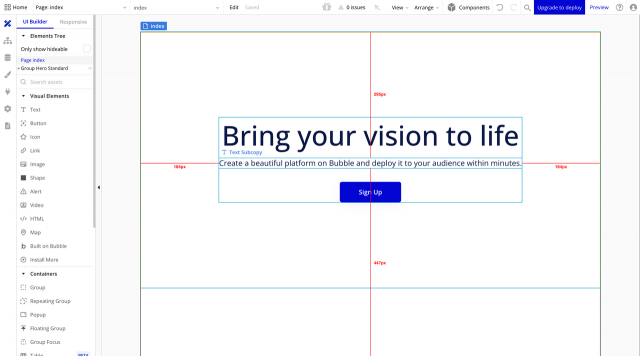
Best For: Building complex web applications without backend coding.
Unique Features:
- Visual interface for full-stack development
- Custom database and logic creation
- Plugin marketplace for integrations
- Responsive design control
Ideal Use Case:
Great for startups and entrepreneurs building SaaS platforms, marketplaces, or MVPs that need user management, dynamic data, and design control.
2. Adalo
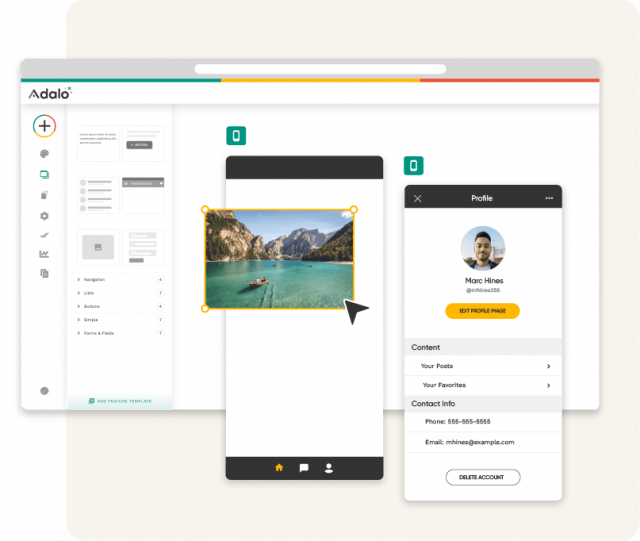
Best For: Mobile apps with strong UX/UI design needs.
Unique Features:
- Drag-and-drop mobile builder
- Pre-built components like forms, buttons, and lists
- Native mobile publishing (iOS & Android)
- Database creation with external integrations
Ideal Use Case:
Perfect for entrepreneurs or teams needing native mobile apps quickly—especially for events, communities, or internal tools.
3. AppSheet (Google)
Best For: Data-driven apps from spreadsheets.
Unique Features:
- Connects directly with Google Sheets and Excel
- Workflow automation
- Secure deployment within Google Workspace
- App customization with no code
Ideal Use Case:
Excellent for businesses managing inventory, staff checklists, CRM tasks, or internal reporting—especially within the Google ecosystem.
4. Glide
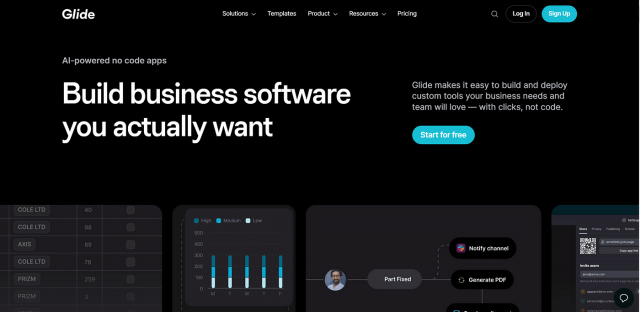
Best For: Quick apps built from spreadsheets.
Unique Features:
- Real-time spreadsheet sync (Google Sheets, Excel)
- Drag-and-drop UI builder
- Built-in logic and automation
- Public or private app publishing
Ideal Use Case:
Non-technical users who want to create client portals, directories, or internal dashboards without friction.
5. Nocobase
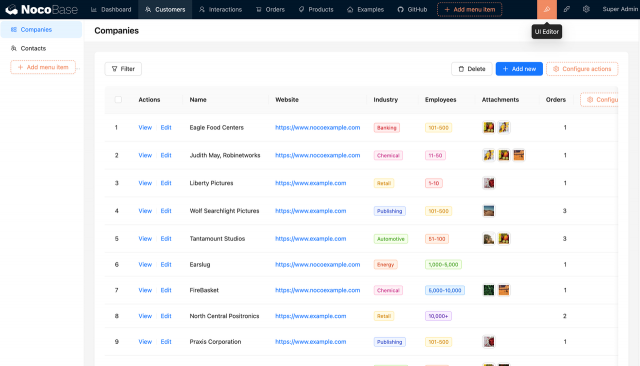
Best For: Open-source, flexible backend systems.
Unique Features:
- Self-hosted and highly customizable
- Built-in user roles, permissions, and relationships
- Plugin system for extensibility
- Relational database structure (like Airtable on steroids)
Ideal Use Case:
Perfect for developers or tech teams that want full control over a scalable backend, with the freedom of open-source customization.
6. FlutterFlow
Best For: Cross-platform app development with code export.
Unique Features:
- Based on Google’s Flutter framework
- Full visual builder for mobile/web apps
- One-click Firebase integration
- Export to Dart/Flutter code
Ideal Use Case:
Ideal for developers needing a production-grade app fast, with the flexibility to modify exported code for more complex needs.
7. OutSystems
Best For: Enterprise-grade web and mobile applications.
Unique Features:
- Built-in DevOps and lifecycle management
- Integration with legacy systems and APIs
- AI-powered development assistance
- Governance and performance monitoring
Ideal Use Case:
Enterprises building large, mission-critical apps with long-term maintenance in mind.
8. Mendix
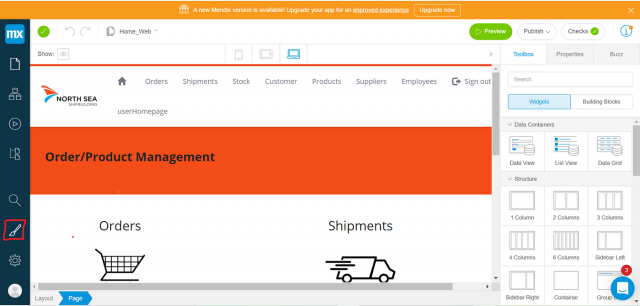
Best For: Agile, scalable app development in large orgs.
Unique Features:
- Multi-experience support (mobile, web, chatbots)
- Workflow automation
- Cloud-native (supports AWS, Azure, etc.)
- Drag-and-drop logic and AI tools
Ideal Use Case:
Best suited for IT departments collaborating with business users on large applications requiring rapid iterations.
9. Kissflow
Best For: Workflow automation and business apps.
Unique Features:
- Process automation designer
- Built-in integrations (Google, Slack, etc.)
- Project & task management
- No-code app builder with user-friendly UX
Ideal Use Case:
Operations, HR, or finance teams creating automated internal workflows without needing IT support.
10. Appian
Best For: Low-code automation with enterprise security.
Unique Features:
- Unified process automation platform
- AI-powered recommendations
- Low-code + BPMN (business process modeling)
- Case management & RPA features
Ideal Use Case:
Heavily regulated industries (finance, healthcare, government) requiring automation with audit trails and compliance.
Platform |
Best For |
Key Feature Highlights |
Ideal Users |
| Bubble | Full-stack web apps | Visual backend, logic workflows, plugin marketplace | Startups, SaaS builders |
| Adalo | Mobile-first applications | Drag-and-drop UI, publish to App Stores | Designers, small teams |
| AppSheet | Spreadsheet-based apps | Google Sheets integration, workflow automation | Internal teams, data-driven users |
| Glide | Fast MVPs from spreadsheets | Real-time sync, client portal templates | Consultants, agencies |
| Nocobase | Self-hosted backend systems | Open-source, role-based access, plugin extensibility | Developers, tech-savvy builders |
| FlutterFlow | Cross-platform with code export | Visual Flutter builder, Firebase integration, code export | Dev teams, hybrid app creators |
| OutSystems | Enterprise-grade systems | DevOps, AI tools, legacy system integrations | Large IT departments |
| Mendix | Agile enterprise solutions | Multi-experience support, cloud-native, workflow automation | Enterprises, agile teams |
| Kissflow | Workflow and task automation | App builder + workflow + project management | Business teams, HR, Ops |
| Appian | Secure process automation | RPA + BPMN, AI, compliance and governance controls | Regulated industries |
Final Thoughts
As we look ahead, it’s clear that no-code and low-code platforms are more than just trends; they’re shaping the next era of software development. Whether you’re an entrepreneur building your first app or an enterprise optimizing complex systems, the right platform can significantly reduce time to market and lower development barriers.
The future of development isn’t about replacing code—it’s about choosing the right level of abstraction for your goals. No-code offers speed and simplicity, while low-code delivers flexibility for more intricate needs. Understanding where each fits empowers teams to build smarter, faster, and with greater impact.